Concrete vs. Asphalt: What MN Homeowners Need to Know
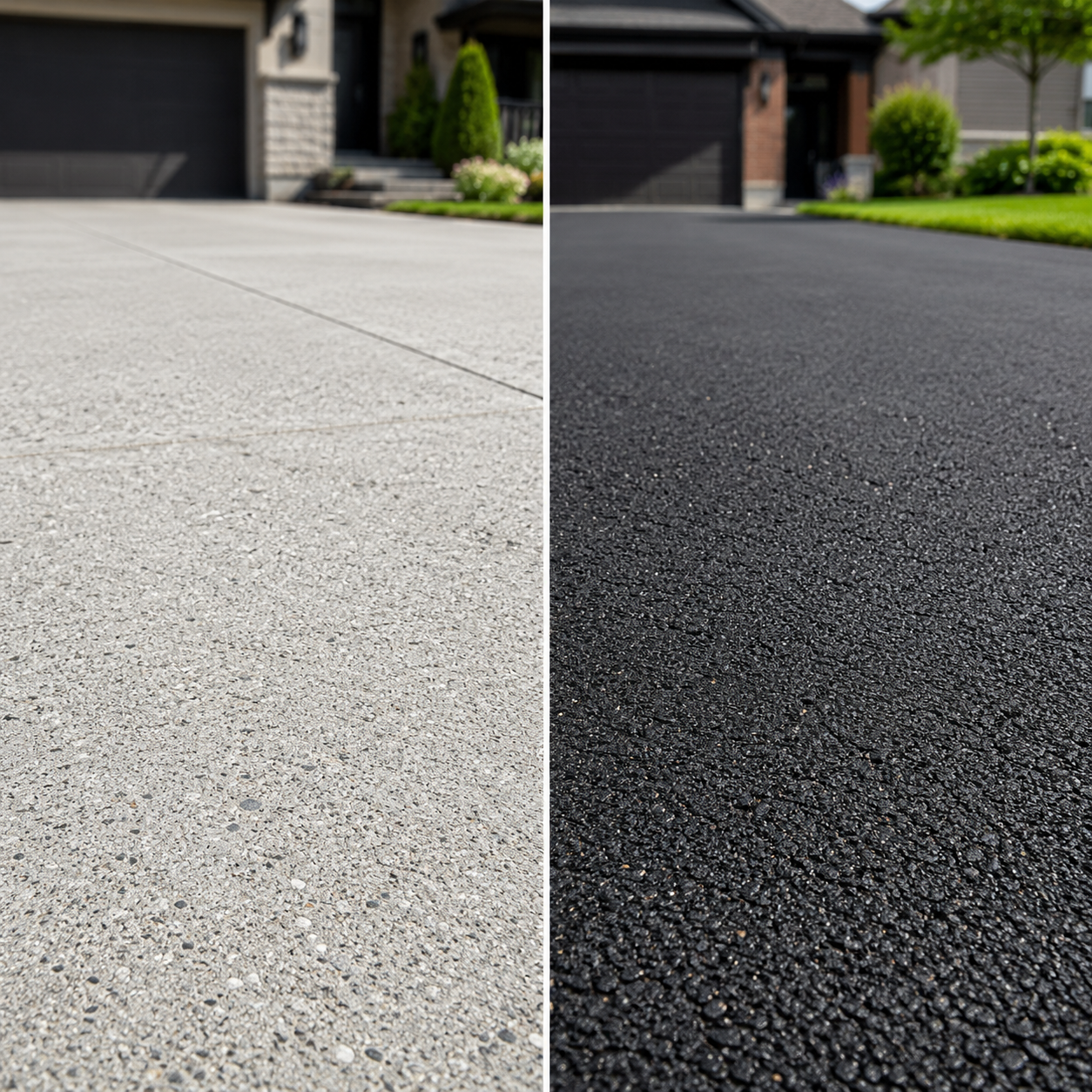
One of the most common questions we get from Twin Cities homeowners is simple: should I go with concrete or asphalt?
It's a fair question. Both materials work. Both have been poured in driveways across Minnesota for decades. But they perform differently, cost differently, and hold up differently — especially in a climate like ours where winter doesn't mess around.
Here's an honest breakdown to help you make the right call for your property.
The Upfront Cost Difference
Asphalt is cheaper to install. There's no way around that. A typical asphalt driveway runs less per square foot than a concrete pour, which makes it an appealing option when you're watching the budget.
Concrete costs more upfront. The materials are more expensive, the pour requires more skill, and the finishing process takes longer. That higher initial price is real.
But the upfront number is only part of the story.
Long-Term Durability: Where Concrete Pulls Ahead
A properly installed concrete driveway in Minnesota lasts 30 to 40 years with reasonable maintenance. Asphalt typically lasts 15 to 20 years before it needs significant work — or full replacement.
When you factor in that lifespan difference, concrete often comes out ahead on total cost over time. You're not paying for the driveway twice.
The key phrase is properly installed. A concrete driveway that skips proper base prep or uses the wrong mix won't last 30 years. That's true of any material. The installation quality matters as much as what gets poured.
Maintenance: What Each One Actually Requires
Asphalt needs resealing every 3 to 5 years to stay in good shape. Skip a sealing cycle and the surface starts to oxidize, crack, and deteriorate faster. You'll also deal with more patching over time as the material shifts and softens in heat.
Concrete needs resealing too — every 3 to 5 years is a good target — but it requires less repair work in between. It doesn't soften in summer heat, and it holds its structure better under heavy vehicle loads.
Neither material is completely maintenance-free. But concrete is generally lower-effort to maintain over the long haul.
How Each Material Handles Minnesota Winters
This is where the comparison gets specific to our climate, and it matters.
Minnesota averages more freeze-thaw cycles per year than most of the country. Water gets into small surface openings, freezes, expands, and widens those openings. Repeated enough times, even a solid-looking surface starts to break down.
Asphalt is more flexible and can absorb some of that movement — but it's also more vulnerable to road salt and de-icing chemicals, which soften the binder and accelerate surface deterioration.
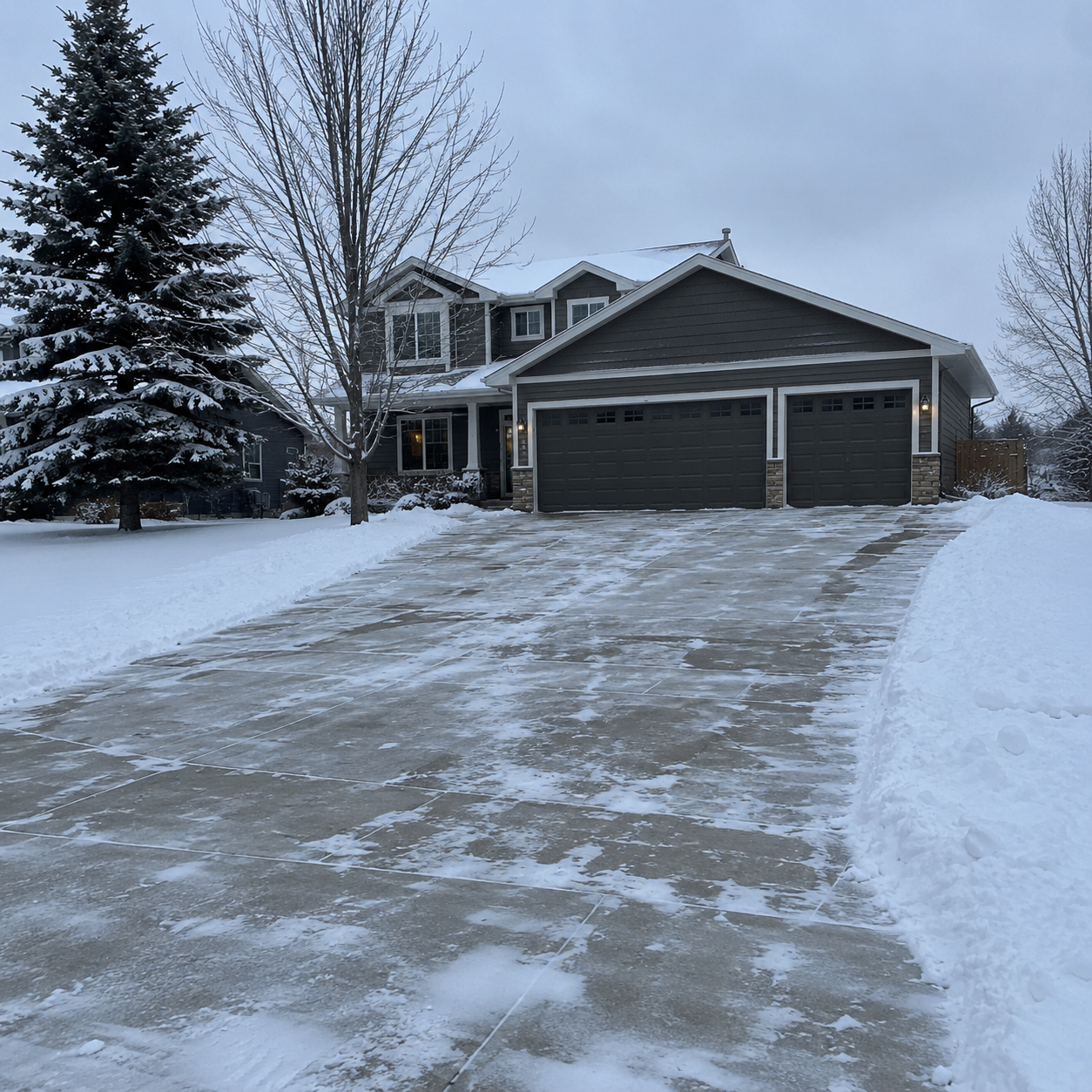
Concrete is more rigid, which means it doesn't move with freeze-thaw the same way. It can crack if it's not reinforced properly or if the base underneath shifts. But with rebar reinforcement, proper control joints, and a good sealer, concrete handles Minnesota winters well.
The sealer is critical for both materials. On concrete especially, a quality sealer protects the surface from salt intrusion and moisture damage. At JW Concrete, we finish every driveway with Ultimate Barrier — a professional-grade sealer that outperforms anything you'll find at a hardware store.
What We Use and Why
When we pour a concrete driveway, here's what goes into it:
5,000 PSI concrete mix — stronger than the standard residential blend, built for load and weather stress
Class-5 compacted rock base — proper drainage and a stable foundation that won't shift
Rebar reinforcement — not wire mesh, not shortcuts; steel that keeps the slab together under pressure
Control joints — placed intentionally to guide where any movement occurs, so cracks happen where we plan for them, not randomly across your driveway
Ultimate Barrier sealer — applied at the finish to protect the surface from day one
Every JW Concrete driveway also comes with a 3-year warranty, because we stand behind the work.
So Which One Should You Choose?
If your primary goal is the lowest possible upfront cost and you're okay with more maintenance and a shorter lifespan, asphalt is a reasonable choice.
If you want a driveway that lasts 30 to 40 years, holds up through Minnesota winters, and doesn't need constant attention, concrete is the better investment.
Most of our customers are in the second camp. They've had their asphalt driveway for 15 or 20 years, they're replacing it, and they don't want to have this conversation again in another 15 years.
That's exactly what concrete done right gives you.
Want to talk through the right option for your property? We offer free estimates and are happy to walk you through what makes sense for your specific situation — no pressure, no sales pitch.
Get your free estimate or reach out directly. We serve Minneapolis, St. Paul, and the greater Twin Cities metro.