
Why Concrete Driveways Crack in Minnesota
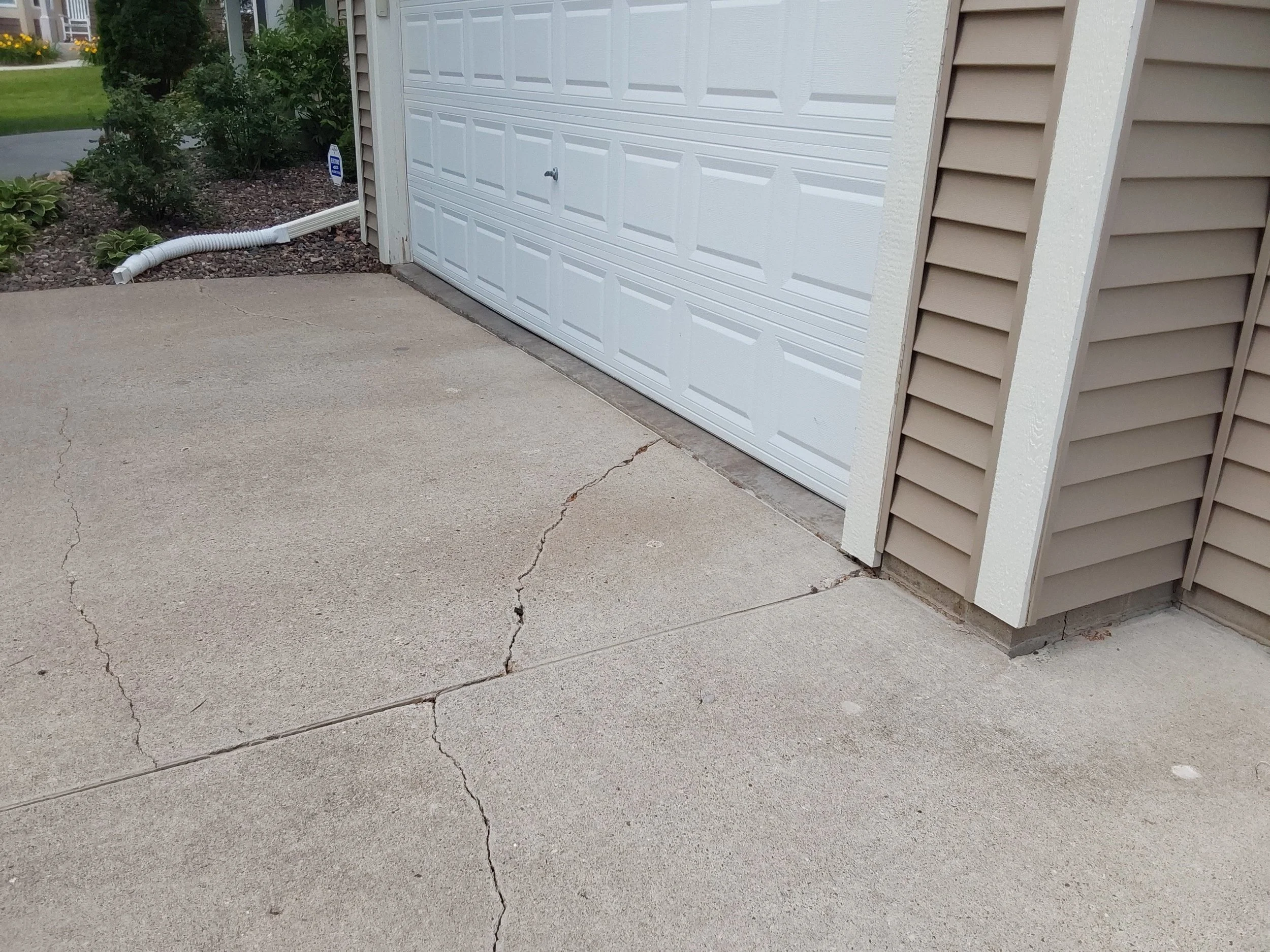
Almost every driveway will crack at some point. The difference between a crack that stays minor and one that spreads every year usually comes down to what's underneath the concrete. Minnesota's freeze-thaw cycles expose shortcuts fast—and once cracking starts, surface fixes rarely solve the real issue.
Freeze-Thaw Cycles and Ground Movement
Water seeps into the soil, freezes, expands, and shifts the ground below your driveway. When the base isn't prepared correctly, the concrete moves with it. That movement shows up as cracks.
Poor Base Preparation (The Most Common Cause)
Concrete doesn't fail on its own. Most failures start below the surface. Shortcuts during base prep—like insufficient compaction or skipping problem areas—lead to:
Uneven support
Settling
Widespread cracking over time
This is where quality workmanship matters most.
Improper Joint Placement
Concrete needs room to move. Control joints help guide where that movement happens. When joints are rushed, poorly placed, or skipped, cracking happens wherever the concrete decides to move—usually not where you want it.
Reinforcement Done Wrong
Reinforcement only works when it's placed correctly and supported properly. Tossing it in without intention doesn't stop cracking—it just creates a false sense of security.
Can Cracks Be Repaired?
Small, isolated cracks can sometimes be managed. But when cracking is widespread or tied to sinking sections, repairs don't fix the underlying problem. That's when replacement becomes the smarter long-term move.
Not sure if your cracks are cosmetic or structural?
Request a free estimate and we'll take a look and give you an honest answer.